🧰 Tools & Gear You’ll Need
- A comfortable, quiet space for brainstorming and writing
- Pen and paper, or a laptop/tablet
- A list of significant memories and inside jokes
- Photos of you and your partner
- A timer for practice sessions
- A trusted friend or family member for feedback (optional)
- Your ceremony’s outline and officiant’s guidelines
Understand the Essence of Wedding Vows
Wedding vows are more than just tradition; they’re legally binding promises and deeply personal declarations of love and commitment. The goal isn’t to recite poetry or deliver a flawless speech, but to express your genuine feelings for your partner and articulate the specific promises you intend to keep throughout your marriage. This means moving beyond generic sentiments and tapping into what makes your relationship unique.
What Truly Makes Vows “Heartfelt”?
Heartfelt vows resonate because they are specific, authentic, and deeply personal. They reflect a genuine understanding of your partner, your shared history, and your vision for the future. They might include specific memories, inside jokes, or acknowledgments of challenges overcome together. True heart is found in vulnerability, sincerity, and the courage to express your deepest emotions directly and honestly. It’s about showing, not just telling, your partner how much they mean to you.
Common Pitfalls: Clichés and Nervous Habits to Avoid
The biggest traps are clichés and nervous tendencies. Avoid phrases like “I promise to love you unconditionally,” “You complete me,” or “I can’t imagine life without you” unless you can tie them to a specific, personal anecdote. These sound sweet but often lack originality and can feel recited. Nervous habits include speaking too quickly, mumbling, avoiding eye contact, or over-relying on a memorized script. Recognizing these pitfalls is the first step to avoiding them.

Reflecting on Your Journey: Key Memories and Milestones
Before you write a single word, take time to reminisce. Think back to how you met, your first date, significant milestones (moving in together, overcoming a challenge, achieving a goal as a couple), and those quiet, everyday moments that solidified your bond. Jot down specific anecdotes, sensory details (what did it smell like, sound like?), and the feelings associated with these memories. These are the building blocks of authentic vows.
Identifying Your Partner’s Core Qualities and Your Shared Future
What do you admire most about your partner? Is it their kindness, their sense of humor, their resilience, their passion for a hobby? Be specific. Instead of “You’re so funny,” try “I love the way you can always make me laugh, even when I’m stressed, like that time you…” Consider your shared dreams and aspirations. What kind of life do you envision together? What values do you want to uphold as a married couple?
Pinpointing Specific Promises, Not Generic Platitudes
This is crucial. Move beyond “I promise to be there for you.” What does “being there” look like in your relationship? Does it mean making them coffee every morning? Listening without judgment after a hard day? Always saving them the last bite of dessert? Identifying concrete actions makes your promises tangible and believable. Think about what you *will* do, not just what you *won’t* do (like “I won’t stop loving you”).

The “Opening Hook”: Setting a Genuine Tone
Start with something that immediately feels like *you*. This could be a direct address to your partner, a brief acknowledgment of the moment, or a short, sweet sentence capturing the essence of your feelings. Avoid lengthy, formal introductions. For example: “Standing here with you today feels like the most natural thing in the world,” or simply, “my family, I love you.”
“The Story So Far”: Weaving in Your Shared History
This is where those brainstormed memories come in. Select one or two key moments or themes that illustrate the growth of your relationship. It could be the story of how you fell in love, a challenge you faced together, or a funny anecdote that encapsulates your dynamic. Keep it concise and relevant to your commitment. Example: “I remember our disastrous first camping trip, where everything went wrong, but seeing you laugh hysterically in the rain made me realize I wanted to face every kind of weather with you.”
“My Promises to You”: Specific, Actionable Commitments
This is the core of your vows. Translate those brainstormed specific promises into sentences. Frame them as commitments you are making now and will uphold. Use strong action verbs. Instead of “I hope to always be kind,” say “I promise to always choose kindness with you, even when we’re tired.” Structure these promises clearly, perhaps addressing different aspects of your life together: emotional support, shared adventures, personal growth, enduring challenges.
“Looking Ahead”: Envisioning Your Future Together
Briefly touch upon your hopes and dreams for your married life. This isn’t about listing specific goals, but about expressing your optimism and commitment to building a future together. It could be about growing old together, continuing to learn from each other, or simply cherishing the everyday moments. Example: “I look forward to countless more mornings, quiet evenings, grand adventures, and lazy Sundays with you by my side.”
The “Closing Statement”: A Memorable and Sincere Farewell
End your vows with a powerful, heartfelt statement that summarizes your commitment or expresses your ultimate love. It should feel conclusive and leave a lasting impression. This could be a simple declaration of love, a reiteration of your commitment, or a look towards your lifelong journey. Example: “You are my best friend, my love, and my home. I choose you today, and I will choose you every day for the rest of our lives.”

Practice Makes Perfect: Rehearsal Techniques for Confidence
Read your vows aloud. A lot. Practice in front of a mirror, record yourself on your phone, or recite them to a trusted friend. This helps you identify awkward phrasing, gauge the timing, and become comfortable with the words. Focus on sounding natural, not on perfect recitation. The goal is to internalize the message so it flows genuinely, not to memorize word-for-word like a script.
Using Notes Effectively: Beyond a Full Script
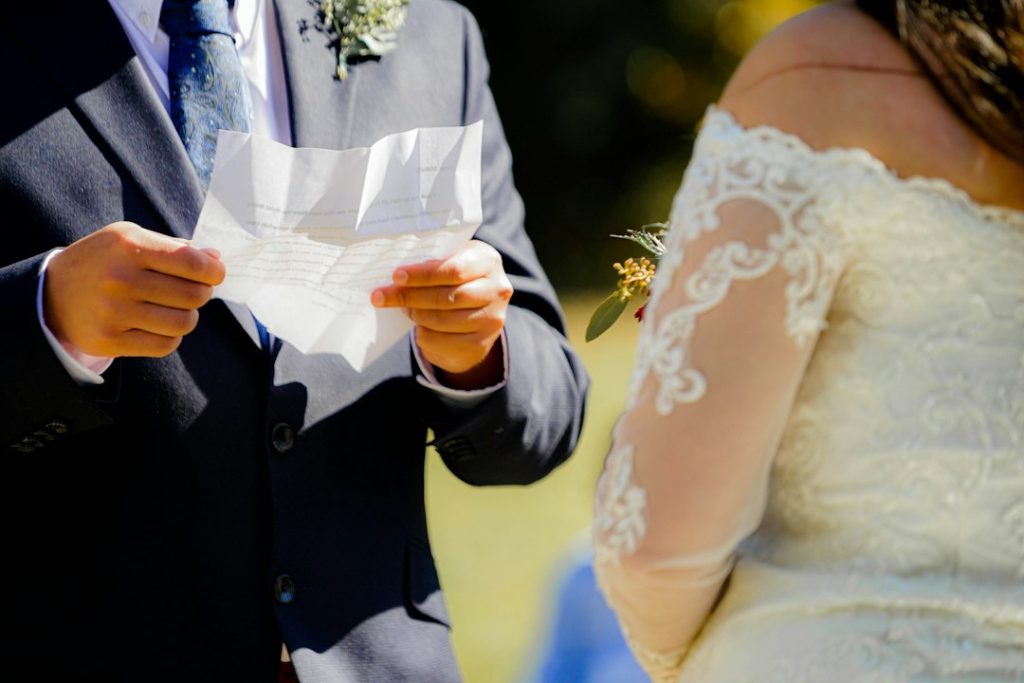
Most couples benefit from having notes. Instead of a full script, consider using cue cards with keywords or short phrases that remind you of the points you want to make. This allows you to maintain eye contact and sound more spontaneous. Number your cards and keep them in a logical order. Practice using your notes so you can glance at them smoothly without breaking your flow.
Pacing and Pausing: The Art of Delivery
Nerves often cause people to rush. Consciously slow down your pace. Take deep breaths before you start and between sentences. Strategic pauses are powerful; they allow your words to sink in and give you a moment to gather your thoughts. Don’t be afraid of silence. A well-placed pause can add emotional weight to your vows.
Connecting with Your Partner and the Audience
Throughout your vows, make eye contact with your partner. This is the most important connection. Glance occasionally at your audience (family and friends) to include them, but keep the primary focus on your partner. Smile genuinely. Let your emotions show; it’s okay to get a little teary-eyed – it signals authenticity. Speak clearly and project your voice, even if you’re naturally soft-spoken.
Vows Focusing on Shared Growth and Resilience
These vows emphasize how the couple has supported each other through challenges and has grown together. Example: “Remember when we first started dating, and I was so unsure of myself? You saw something in me I couldn’t see, and your constant belief has helped me grow into the person I am today. I promise to always be your biggest cheerleader, to champion your dreams, and to face every challenge alongside you, knowing that together, we are stronger.”
Vows Celebrating Everyday Moments and Deep Affection
These vows highlight the beauty found in the ordinary. Example: “I love our ordinary moments just as much as the grand adventures. I love our Sunday mornings with coffee and the newspaper, the way you always know how to fix things around the house, and the quiet comfort of just being next to you. I promise to cherish these everyday moments, to find joy in the simple things with you, and to always let you know how deeply you are loved.”
Vows Embracing Humor and a Playful Partnership
These vows incorporate lightheartedness and reflect a couple’s shared sense of humor. Example: “I promise to love you, honor you, and occasionally let you win at board games – but only sometimes. I vow to always be your partner in crime, your co-conspirator in ridiculous schemes, and the first person you call when you need a laugh. You make life an adventure, and I can’t wait for all the silly, wonderful years ahead.”

“I Just Can’t Think of Anything”: Overcoming Blank Page Syndrome
This is common! Step away from the writing and focus on reflecting. Look through old photos, read old texts or emails from your partner, talk to friends or family who know you both well. Revisit the pre-vow brainstorming questions. Sometimes, the pressure to write the “perfect” vow freezes us. Remind yourself that sincerity trumps perfection. Focus on one specific memory or one core promise, and build from there.
“It Sounds Too Simple”: Elevating Everyday Feelings
Everyday moments often hold the deepest truths of a relationship. The key is to describe them with specific, evocative language. Instead of “I love spending time with you,” try “I cherish the quiet comfort of our evenings together, just reading side-by-side, knowing I’m exactly where I’m supposed to be.” Add a layer of reflection on *why* these simple moments matter so much to you.
“It Sounds Too Dramatic”: Striking the Right Balance
Wedding vows can easily tip into overly dramatic or flowery language if you’re not careful. The antidote is specificity and grounding. If you feel your vows are becoming too grand, inject a small, realistic, perhaps even slightly humorous, detail. For instance, if you’ve written “I will conquer mountains for you,” balance it with “And I promise to always help you find your misplaced keys.” Authenticity is more compelling than melodrama.
Reading Aloud for Flow and Authenticity
Once you have a draft, read it aloud multiple times. Does it flow well? Are there any awkward transitions? Does it sound like *you* speaking? This is the best way to catch clunky sentences or unnatural phrasing. Adjust words and sentence structure until it feels comfortable and genuine on your tongue.
Seeking Trusted Feedback (If Desired)
If you feel comfortable, share your vows with a trusted friend, family member, or even your officiant. Ask them specifically if anything sounds cliché, if the flow is good, or if it captures your voice. Choose someone who understands your relationship and will offer constructive, honest feedback, not just praise.
Ensuring Your Vows Align with Your Ceremony’s Tone
While your vows are deeply personal, they are also part of a larger ceremony. Make sure the tone and length are appropriate for the overall context. If your ceremony is very traditional and formal, overly casual or humorous vows might feel out of place, and vice-versa. Check with your officiant about any specific guidelines or limitations on vow length or content.